

Jewellery Care
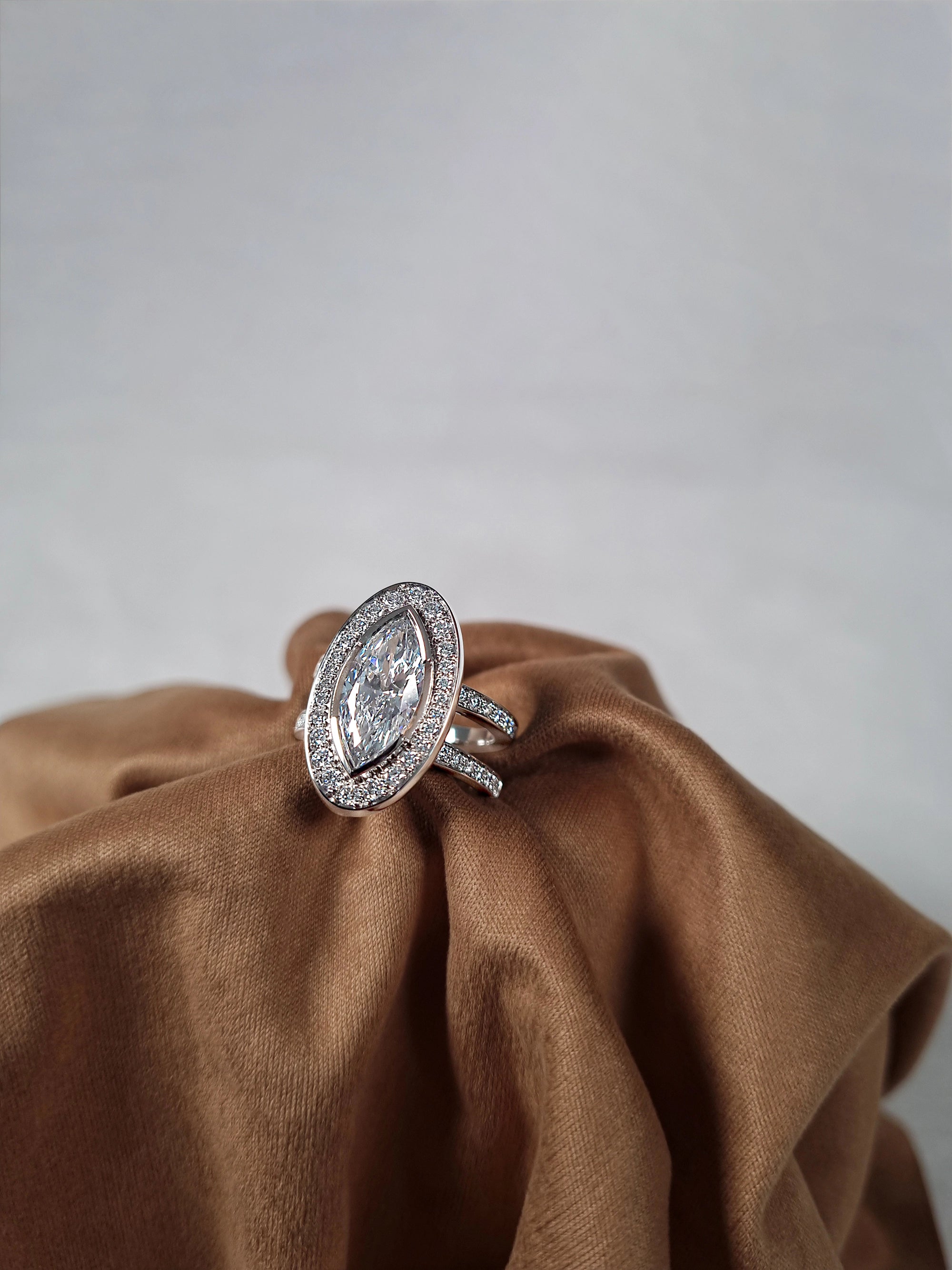
Made to be worn. Every day.
Fine jewellery is made to be worn, and worn often. With a little attention, your piece will look as beautiful in twenty years as it does today. These are the habits that make the difference.
Daily
Polish with a soft cloth after wearing to remove oils and maintain brightness.
Monthly
Gentle clean with warm soapy water and soft toothbrush. Check settings visually.
Every 6 months
Check diamond solitaires for stone tightness.
Annually
Full clean and stone check for bespoke engagement pieces. Complimentary and encouraged.
Gold and diamonds are durable. They respond to the world around them.
Remove your pieces before these moments, not because it is fragile, but because it deserves to be treated as the considered object it is.
- Showering or bathing
- Applying perfume or cosmetics
- Swimming
- Any hands-on work involving chemicals or impact
- Sleeping
- Exercising
- Cooking, washing up or cleaning
Depending on what your professional life involves, consider carefully whether your piece should be worn during working hours. If in doubt, get in touch, Stephanie is happy to advise for your specific piece.
Diamonds are the hardest natural material, but the settings that hold them are more delicate. Check diamond solitaires every six months for stone tightness, this is a service Stephanie offers complimentarily, and it takes only a few minutes.
Pavé bands, where small diamonds line the band, held by barely-visible prongs or beads, require consistent care. Check the band regularly for any signs of loose stones, and bring it in for a professional check annually.
Pieces with gemstones benefit from an annual check, either with a professional, or at home by gently pressing the stone and watching for any movement. If a stone feels loose, set the piece aside until it can be looked at. Catching this early protects both the stone and the setting.
Opals, moonstones and emeralds are among the softer stones and deserve particular care. Keep them away from heat, sudden temperature changes, and prolonged water exposure. Store opals in a soft cloth when not being worn.
How to clean
Cleaning your piece regularly is one of the most important things you can do to maintain its appearance. It is also a good moment to look it over carefully.
Avoid ultrasonic cleaners for pieces with gemstones, and always avoid harsh chemicals, bleach, and abrasive cloths.
1.
Polish with a soft, lint-free cloth after wearing to remove skin oils and maintain brightness. This alone makes a significant difference.
2.
For a deeper clean, prepare a small bowl of warm water with a drop of mild soap. Soak the piece for a few minutes.
3.
Use a soft toothbrush to gently clean around the setting and beneath the stone. This reaches the areas where oils and residue accumulate.
4.
Rinse thoroughly with clean water and dry with a soft cloth. Avoid this method for opals, moonstones, and other special care stones.
5.
While cleaning, take a moment to check the settings. Look for any movement in the stones and ensure all prongs are sitting correctly.
white gold
Rhodium plating, a material characteristic, not a fault.
Over time, the rhodium layer on white gold pieces wears away with daily contact, revealing the slightly warmer tone of the gold beneath. Re-plating every 12 to 18 months restores the finish completely. This is a material characteristic, not a fault, and entirely expected with regular wear.
Re-plating restores the finish completely and takes only a few days. It is also a good moment to have the piece cleaned and the settings checked. Get in touch to arrange, the service is available for all Stephanie Van Zwam pieces.